Emma Cox: Seeing Psychology as a Science
As a psychology major, from the start I was told that what I was doing wasn’t science, and initially I agreed. My time was spent in classrooms learning therapy techniques or criteria to be diagnosed with a mental disorder, not in a lab mixing chemicals or dissecting animals. I couldn’t imagine what a person who studied psychology would do and what they would study. This wasn’t because I didn’t know the history of psychology, I learned about multiple famous experiments and how they shaped the field into what it is today. Unfortunately, many of the studies were able to be so revolutionary because they were also unethical. Modern psychology has combated this issue with creating a strict code of ethics that must be followed and a strict approval process to start any kind of research. These two things led me to have little understanding of what modern research looked like and its relevance to society.
I decided to start independent research in my junior year at Lander University seeing it more as something to check off the list of things I’ve done in undergraduate before applying to graduate school than as something I was truly passionate about. As an aspiring marriage counselor with surface-level knowledge of the field, I decided to study what I considered to be the basics: motivations for infidelity. Under Dr. Gemberling’s supervision I conducted a thematic analysis on a Reddit post asking “Why did you cheat on your [significant other]? Was it a one-off or have you cheated more than once?”. The purpose of a thematic analysis is to analyze qualitative data (text based instead of numerical) to find overall themes or categories.
General relationship issues were by far the most prominent theme in my data. I read through multiple posts in which people described their intense feelings of frustration, boredom, meaninglessness, and more. To them their problems were so insurmountable and inescapable that cheating was the only way to feel relief.
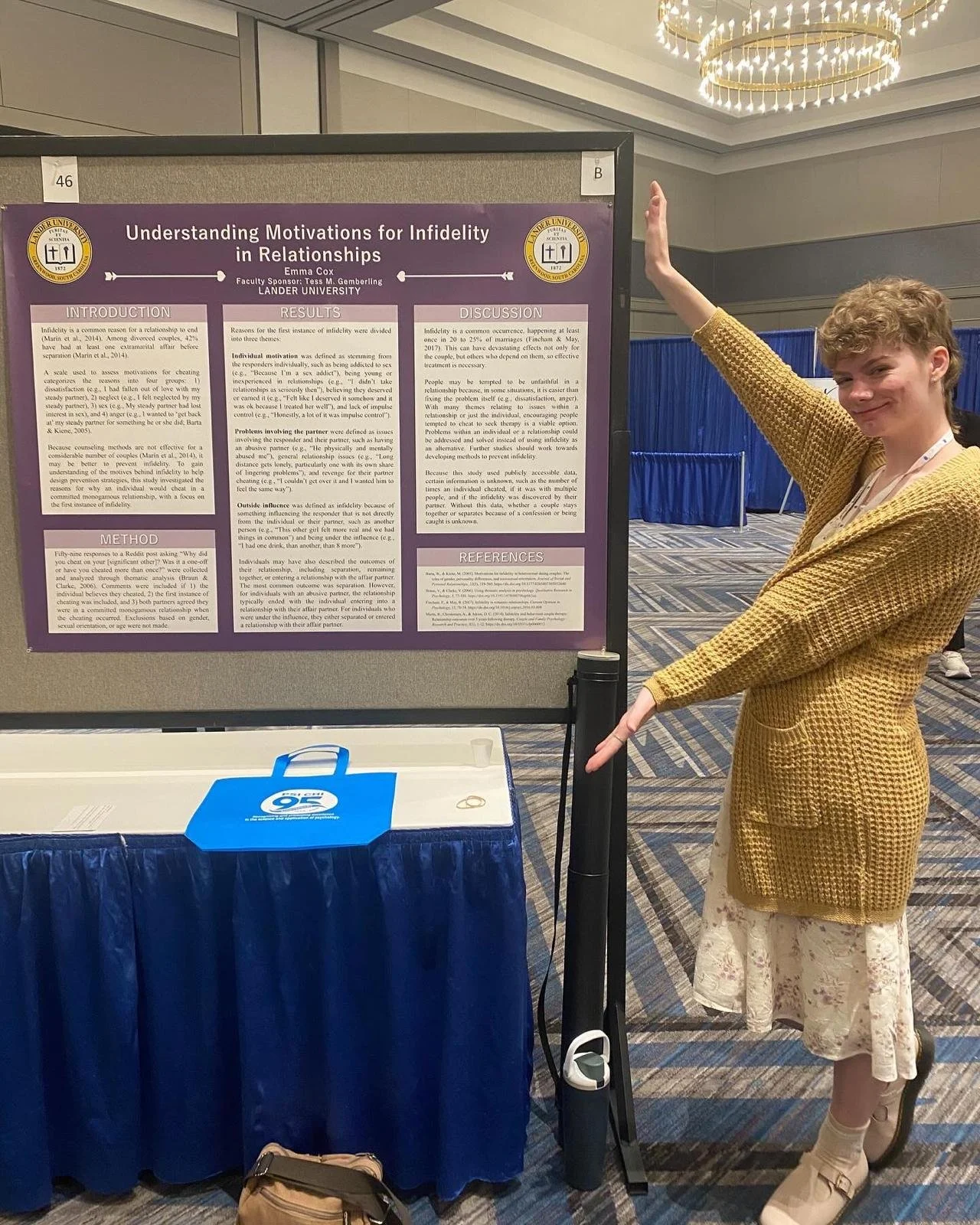
I struggled to understand why people let the problems in their relationship become so severe that cheating was an easier alternative than communicating how they felt with their partner. I understood generally the hesitation of having a difficult conversation but not why people would go to such lengths to avoid it, especially knowing the detrimental consequences that can come with it. Staying together after the discovery of infidelity isn’t likely. For a considerable number of couples’ counseling methods to repair the relationship are not effective making separation the most likely outcome. If someone cared so much about their relationship that they were willing to endure these intense feelings they described, why would they do something to knowingly sabotage it?
This was until I gained more research experience and better understood attachment styles. A person’s attachment style starts developing during infancy based on how their caregiver responded to them in times of need or support (ex: hunger or stress). If a person’s caregiver was readily available when needed for support, they learn how to healthily manage negative emotions and that problems can be solved in adulthood. On the other hand, if they fail to receive sufficient support, they instead see other people as unreliable and treat others as such. Realizing that most people don’t understand how attachment styles impact their lives and in turn give it control over their decisions makes infidelity an understandable alternative; it’s an escape when a person has been taught that building a close connection with someone isn’t safe.
This realization made me finally understand the purpose of being a psychological researcher. Everything they do is to better understand and improve the lives of people who don’t even realize they need it. Their work affects so much of how we function as a society today and yet most people don’t know it’s even happening. As a field it is consistently looked down on and underappreciated when without its existence and contributions everyone’s lives would be significantly harder.
Studying infidelity has led me to discover my passion to understand how people communicate in relationships, what causes them to do so ineffectively, and how to help build healthy marriages. My experience doing research has led me to realize that it is significantly more than just a section of my CV; I have been able to prove to myself that I can accomplish more in my future professional career than I ever thought possible for myself.
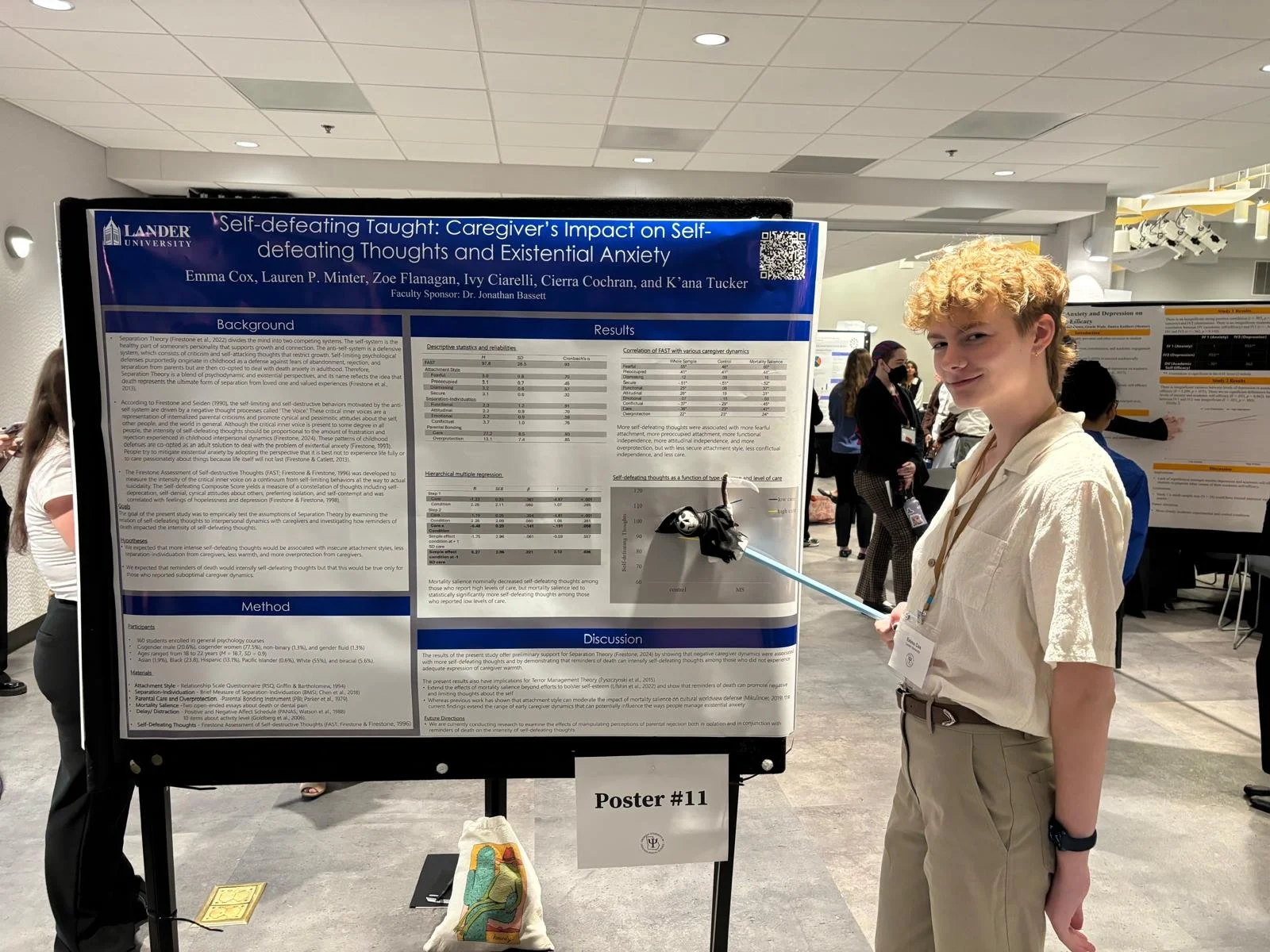
Emma is a psychology major graduating in the spring of 2026. She presented independent research at the Southeastern Psychological Association annual conference in 2025. After graduation she is getting her masters in marriage and family counseling from Converse University.