Elias Carls: Living With Myself
On the afternoon of January 17th, 2025, I sat alone at gate A3 of the Charleston Airport. It had been less than four months since I decided to study abroad. I’d never been on a plane alone, and it was only my third time flying. I was sitting there terrified that I wouldn’t be able to make friends, I was scared to navigate Scotland alone, and I was concerned about the rigor of classes abroad I’d heard others talk about.
But none of the many, many possible issues I was catastrophizing about that day ended up being what really challenged me when I was abroad. The hardest part of the whole experience was ultimately just learning to live with myself.
Just to be clear, my experience was not lonely. Physical isolation is not what I mean when I say living with myself. I made friends quickly and fell into the rhythm of life. The big adjustment was the much slower rhythm of life in Scotland compared to the United States.
Prior to my semester abroad, I found myself constantly doing something. I enjoyed my very busy life where I worked multiple jobs, was involved on campus, took 18 credit hours, and kept up with my personal relationships. I felt comfortable and successful in the routine of never having down time. To put it in perspective, the last semester before I left for Scotland I was vice-president of the history club, president of Phi Alpha Theta, working 20 hours a week at The Museum, taking 18 credit hours at Lander, working as a Presidential Ambassador, and participating in Dr. Rausch’s Experiencing History Lab, all while keeping up a successful social life. All of those activities had me at about 50 working hours per week, not including homework, and it rarely felt difficult.
***
The transition to my schedule in Scotland was jarring. While I was there, I was only taking three classes, which meant I was in a classroom about 5 hours a week. I couldn’t have a job, and although I participated in societies, all I had to do was show up. No planning, coordinating, or game creating necessary. While you would think that I welcomed this change as a much-needed break, I did not.
I felt overwhelmed by the thoughts that took the place of the constant scheduling and planning that usually occupied that space. The ever-present laundry list of things to do at home meant I never really had to think about anything other than what I was doing right then and what I needed to do after. This very quickly pushed me to face a challenge I hadn’t expected: learning to live in my own head.
It wasn’t like I had thoughts that were particularly hard to deal with because of their content, and I have always been aware of my tendency to ruminate and overintellectualize. Although, I will admit than when I left for Scotland, I thought that habit was something I’d worked through. But I found that what I’d really been doing for the past few years was staying so busy that there was no time or space to think about anything else.
When I was in Scotland, I would often find myself unable to fully participate in the excitement of the moment. I just could not get out of my own head. For example, every week my friends and I would go to a pub quiz (which is basically just a Scottish way to say trivia night.) I would spend the entire morning thinking decades into the future, stressing myself about things so far away that I couldn’t even fully imagine them and making myself anxious about anything and everything.
Then I would show up to the pub and very frustratingly spend the majority of the night stressing about what everyone was thinking about everything I said or did, or continuing the morning’s anxiety spiral about whatever my brain had conjured up that day. I could never turn the unrelenting voice off even when I was having fun. It was extremely frustrating to feel like I was ruining my own experience with absolutely no outside help.
I’d love to say that I quickly worked through it and that it was easy and I spent the rest of my trip always in the moment. But that’s not what happened. It took a long time for me to get used to it. I did, slowly, get better at accepting my habit of thinking too much, and I realized that being in your head isn’t always a bad thing. I even started to enjoy my own company.
I did a lot of solo traveling toward the end of my time abroad, and the ability to sit with my thoughts that I’d been forced to learn came in handy. It was especially helpful during my solo trip to the Isle of Skye. I had no idea before I left, but the Isle of Skye (and most of northwest Scotland) does not have any service. Completely oblivious to the forced tech detox I was about to accidentally commit to, I got on my train in Inverness. About an hour into my six-hour train ride my service dropped completely, and I didn’t get it back until I arrived back in Inverness over a week later.
I am more than willing to admit that staying in a foreign country without any connection to the internet was really hard. The first night I was there I walked an hour in the wrong direction when I tried to go to the grocery store because I couldn’t use Google Maps. But my inability to find any form of external amusement gave me the space to appreciate the contents of my thoughts for the first time since I arrived overseas in January.
I can only assume that a long, silent train ride and a week alone without music or movies would be hard for many people, but I found that it is pretty bearable when you can be entertained by constant wondering or debating and philosophizing with yourself. I never felt bored sitting with myself. My thoughts could provide endless entertainment because they were so (usually annoyingly) unable to shut up.
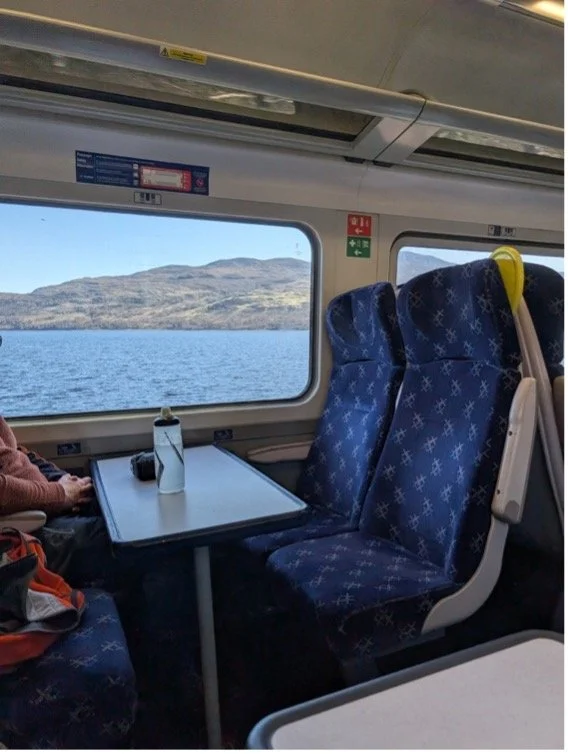
The view from the train window going to Isle of Skye
With the benefit of hindsight, I see that a lot of my anxiety associated with those moments with friends was caused by me. I convinced myself that all that thinking meant I wasn’t “making the most” of every opportunity.
It took being alone with no distractions to show me that my thoughts could be helpful and even fun. It took months more of self-reflection to realize that it was okay to not spend every moment of every day constantly fully engaged with the environment around me. But that wasn’t realization I was capable of fully accepting when I was in the midst of it and frustrated by the constant feeling that I had to work against my own brain.
When I was in Scotland I learned how to travel like a pro, how to put myself out there more often, how to navigate many different public transportation systems, and countless other lessons I will keep with me for the rest of my life. But by far the most important lesson I learned during my time abroad was how to live with myself.
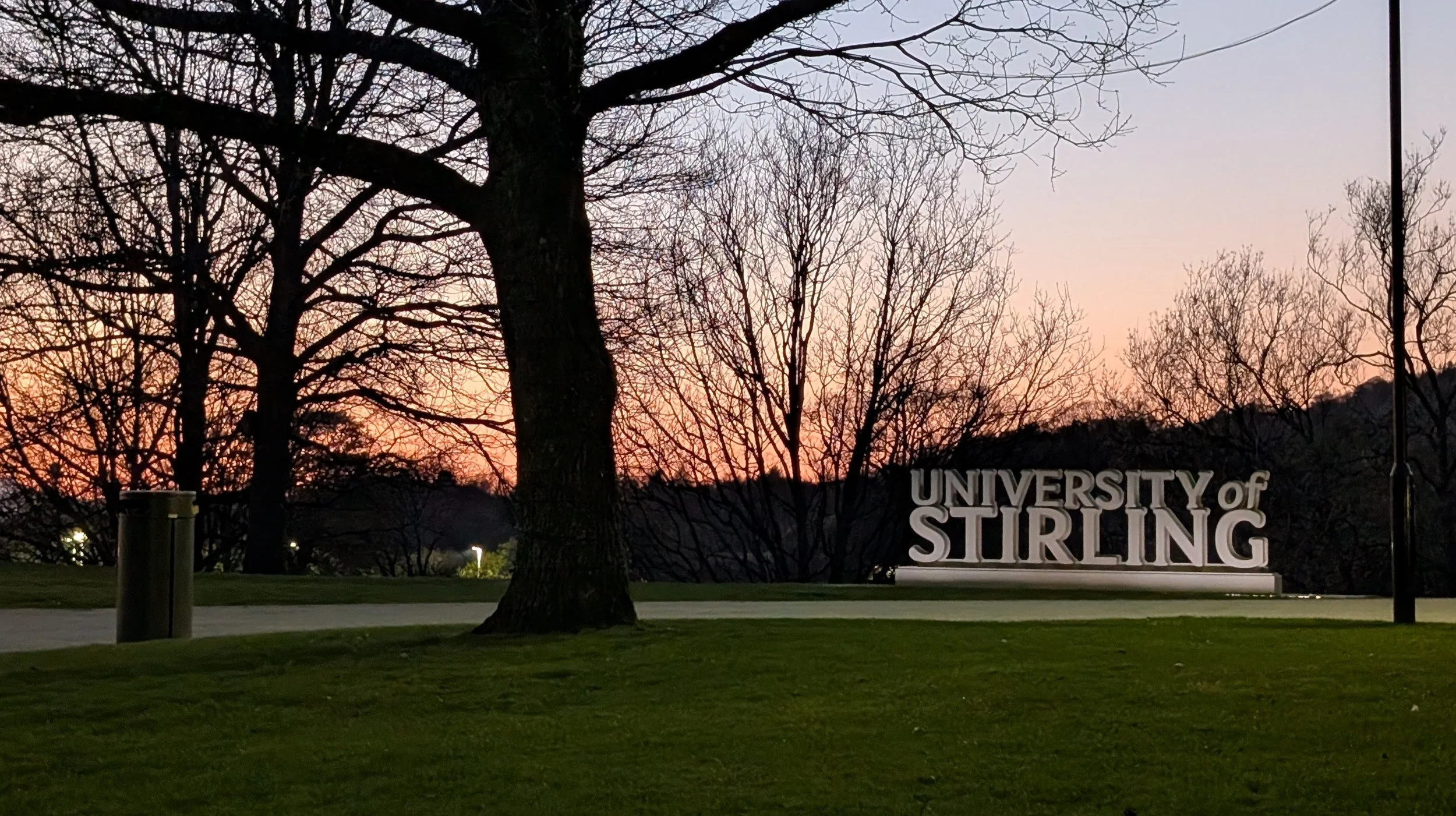
Elias Carls is a double Major in Public History and Public Administration. He studied abroad at the University of Stirling in Stirling, Scotland during spring 2025. After graduating from Lander in May of 2026 he hopes to continue to graduate school with the ultimate goal of eventually working in public policy.