Allen Laymon: Getting Out of Your Comfort Zone
I first fell in love with Spanish in high school, but it wasn’t until my junior year of college that I decided to study abroad in Spain. I signed up for a 3-month program in Madrid. The idea of living with a host family, studying in a foreign language, and navigating a massive European capital was exhilarating.
I was not nervous. I was, in fact, incredibly excited. I’d grown up in Greenwood, South Carolina, a small, safe town I knew well. I was ready for a change.
My flight left at 4 PM from Charlotte. At the airport, I met up with a friend that was also doing the same program as me, Zach.
When our flight touched down in Madrid at 6:00 AM, the bubble of excitement burst. We shuffled off the plane, tired and jetlagged, and immediately faced the first challenge: customs.
My language skills, which felt adequate in the classroom, quickly diminished when faced with the immigration officer. He was a stern, unfriendly man who addressed my friend Zach and I only in rapid Spanish. We could barely understand his questions about our stay. As we fumbled for answers, his frustration became obvious. After a tense minute of our failed attempts to communicate, he sighed, stopped trying, and impatiently stamped our passports and let us through. Once through customs, the sheer scale of the Barajas Airport felt overwhelming. We made our way to our driver that was set up to take us to our host families.
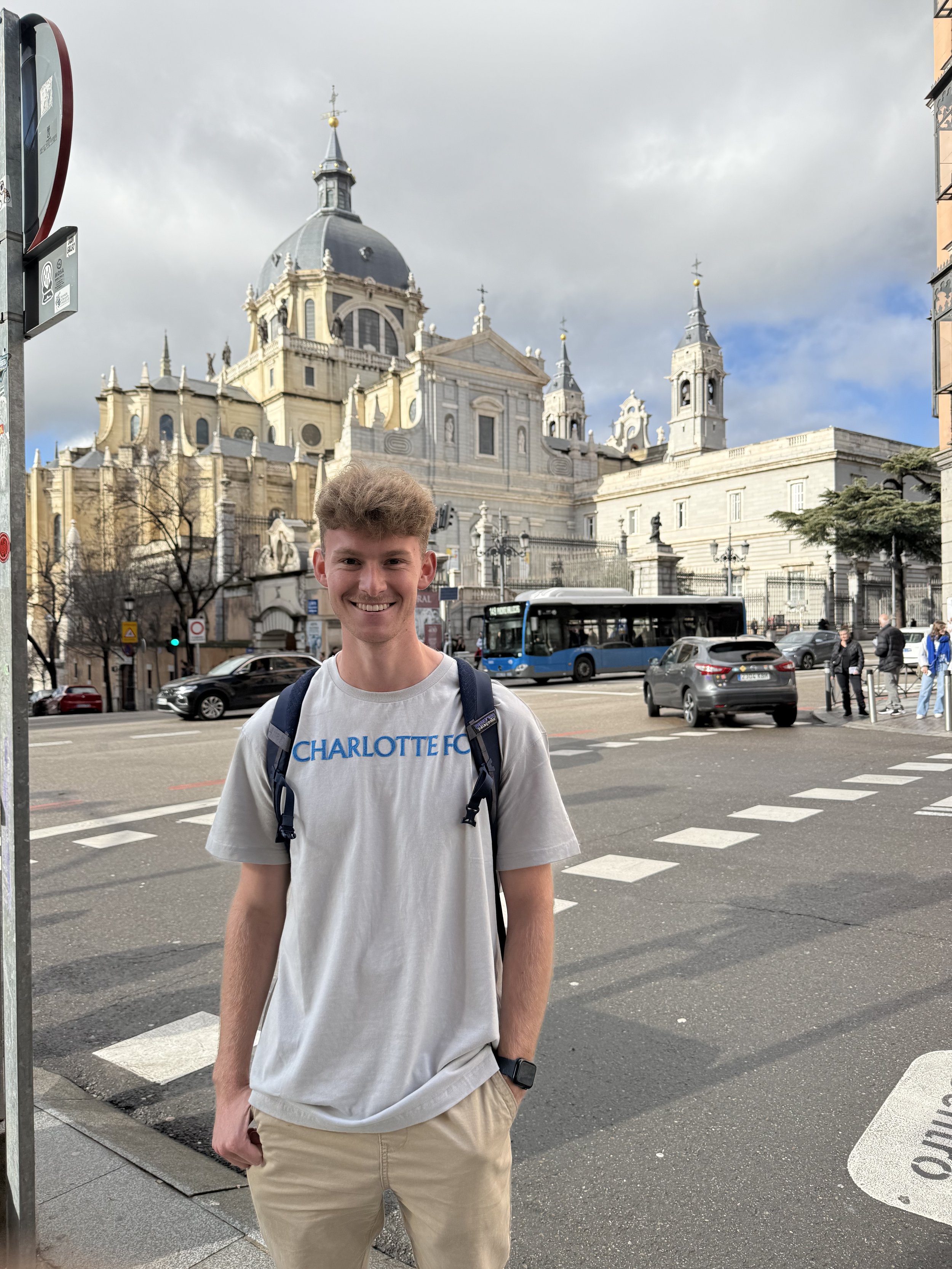
The first few weeks were very tough. Growing up in Greenwood, I had always lived with my parents, even throughout college since they lived five minutes away from the campus of Lander. Going into this trip, I had never lived with anyone other than them, so it definitely had me nervous.
At first, I had to rely heavily on Google Translate to communicate with my host mom, Coral. After the initial first month though, I had gotten the basics down pretty well in Spanish and we could have basic conversations easily, allowing us to get much closer.
Coral also had a 24-year-old son, Lucas, who lived with her. He was almost fluent in English so I could practice with him a lot easier since he could understand my language. He worked full time so I didn’t get to see him as often, but when I did see him, we got along very well.
Throughout the stay, I didn’t have any conflicts with living in the home as I am able to adapt very well to new situations and quickly learned what was expected of me in the house. Coral would cook lunch and dinner for me every day, but I would make my own breakfast. By the end of the trip, we were extremely close and she said that I could come back whenever I wanted and have a free place to stay.
While I was establishing this safe haven at home, I still had to face the daunting task of navigating the city on my own. The Madrid metro is one of the world’s best, but for someone used to driving everywhere, it was a maze in a different language. The first few days, I took the time to understand the metro. This was one of my first victories of the trip.
My language curriculum was intensive. I was enrolled at TANDEM Escuela Internacional, where I took three hours of Spanish Conversation classes every weekday, Monday through Friday. The immersion was invaluable, but in the beginning, it was one of the greatest struggles of my trip. The courses were purely in Spanish, so we never used English. It wasn’t a traditional lecture; it was three hours a day of just conversation, forcing us to actively participate rather than passively learn. Every time I stepped outside of my apartment, I was surrounded by a foreign language. It quickly became the hardest academic challenge of my college career.
This constant challenge led to inevitable, and humbling mistakes. I vividly remember one instance where my teacher greeted me with “Como Estas?” and I confidently replied, “Estoy bueno,” not knowing the difference between that and “Estoy bien.” The teacher started dying of laughter because I had just enthusiastically announced that I “look good” (or “am hot”) instead of saying “I am well.” It was embarrassing, but it was also the perfect lesson in humility and the reality of learning through trial by fire.
Before Spain, I defined my comfort zone by what I knew, my favorite classes, my favorite restaurant, and my friends. This trip showed me that my comfort zone wasn’t a place, but a reliance on familiarity. It was depending on things I didn’t have to think about such as my car and my language. Once those familiar things were gone, I had to find new strength inside myself.
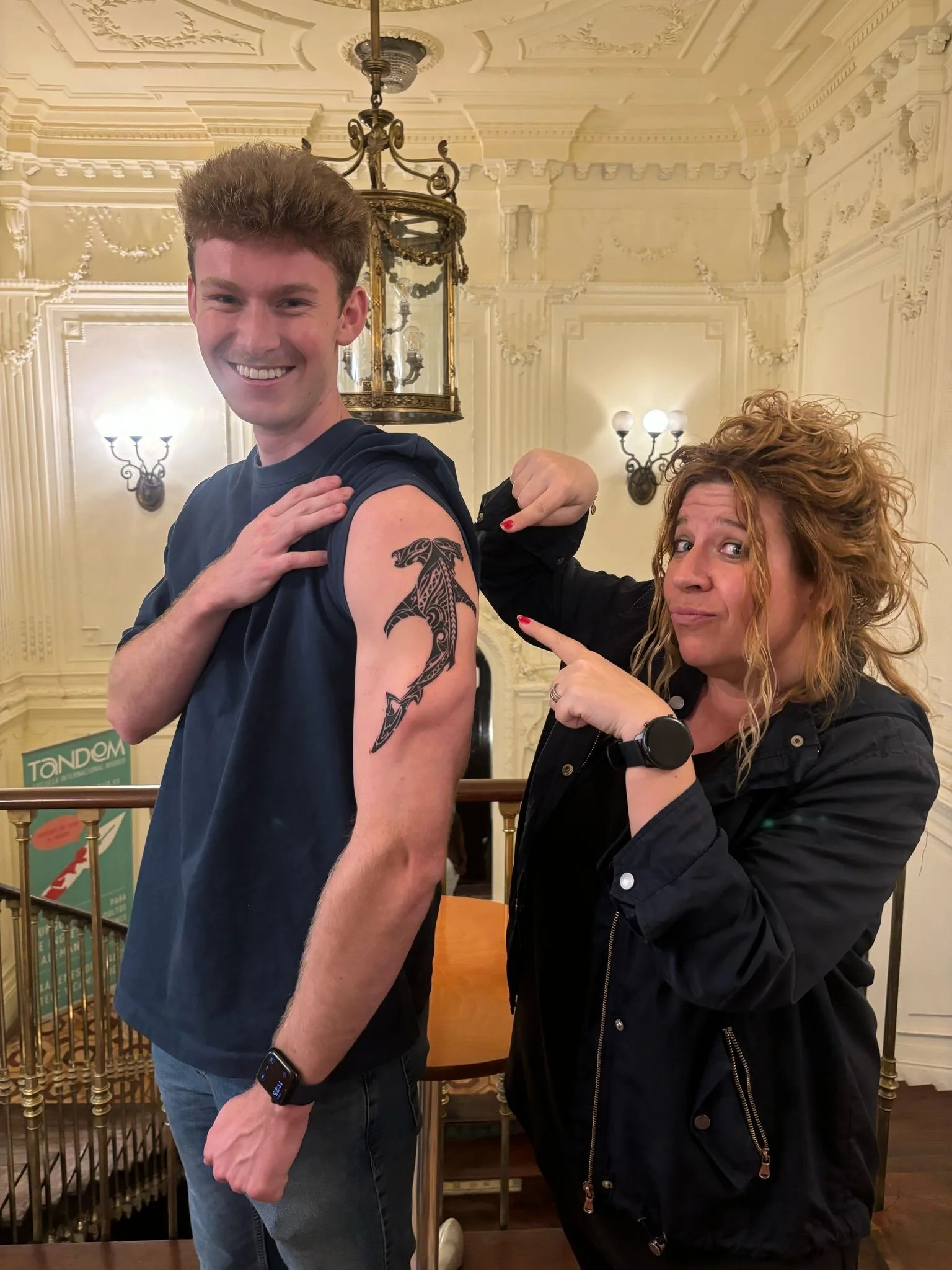
It was this new sense of independence that inspired me to get my very first tattoo. It was a completely spontaneous decision, something I never would have done at home, but I felt like I needed a permanent, physical symbol of the courage and self-reliance I had earned over the course of the semester. The tattoo is a hammerhead shark, and I chose it because hammerhead sharks must constantly swim to survive. It serves as a reminder that I must always keep moving, keep trying, and keep persevering, a lesson directly learned from my time in Madrid.
This new resilience gave me the confidence to push the boundaries even further. The daily struggles in the classroom, combined with my small victories like mastering the metro and communicating with my host mom, built a foundation of practical skills. Because I had already spent weeks learning from my mistakes in the relative safety of Madrid, I was able to thrive, not struggle, when I decided to explore further.
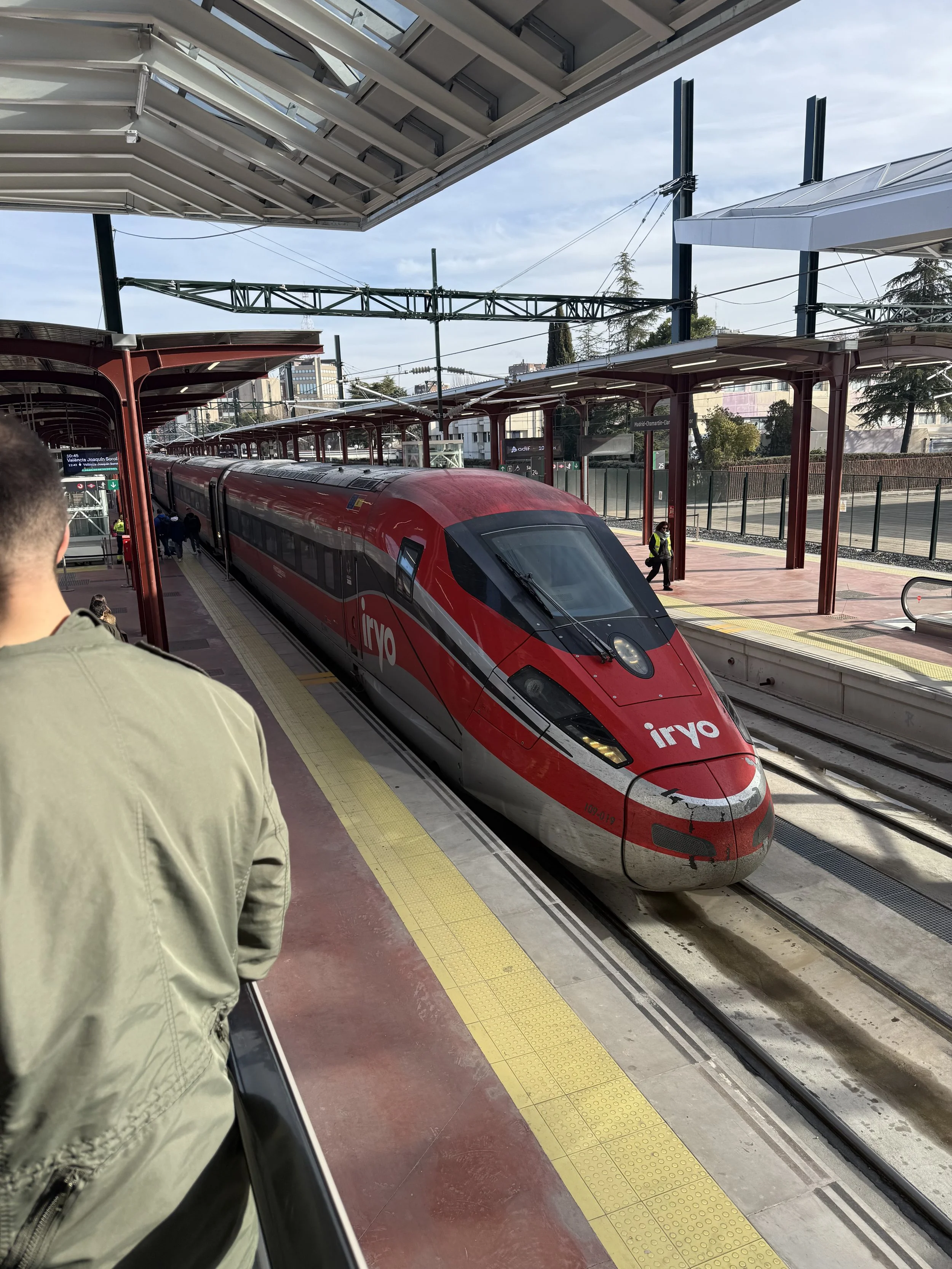
In the latter weeks of the program, I decided to take trips outside of Madrid. I booked a bullet train to Valencia, crossing the country in just a few hours, and on a later trip took a plane to Mallorca. These trips led me to unfamiliar places. I stayed in a hostel for the first time in both cities, relying on my improving Spanish to navigate unfamiliar areas.
I quickly learned that true confidence comes not from avoiding mistakes, but from developing the ability to recover from them. In Spain, I messed up directions, accidentally ordered the wrong meal, and consistently made mistakes when talking in Spanish. Through learning from my mistakes, I grew more and more confident.
Upon returning to Lander, I was no longer the person who was merely excited to travel; I was the person that was capable of navigating complexity. This growth had a direct professional payoff. Even today, working at Chick-fil-A, I often get orders from customers who speak only Spanish. Taking their orders accurately and serving them with the same hospitality as anyone else requires me to continually push past my comfort zone. More rewardingly, I sometimes practice speaking Spanish with some of my coworkers, and they have been genuinely impressed with how much I have retained and how comfortable I am putting it to use. It’s a small, consistent reminder that the skills I gained in the TANDEM classroom are still paying off in my everyday professional life.
Two months into my semester abroad, I interviewed virtually for a summer internship back in the U.S. While in Madrid, I learned to keep calm under pressure, solve problems on the fly, and communicate clearly. These weren’t soft skills, they were survival skills. My ability to confidently articulate how I navigated a city of nearly 3 million people while barely speaking the language was more than compelling to the interviewer.
I landed the internship and began as soon as I returned home to South Carolina. The skills I learned while abroad directly correlated to being successful in the office. I was able to approach professional tasks, tight deadlines, and unexpected issues with the same problem-solving mindset I developed while abroad. The ability to embrace the unknown, rather than fearing it, turned out to be the most valuable professional skill my time in Spain taught me.
Allen Laymon is a senior accounting major with a minor in Spanish. He did a three-month study abroad program in Madrid, Spain. He plans to graduate in May 2026. After graduation, he will attend a Master of Accountancy program.