Allison Canupp: Living on “Greek” Time
On my second day in Rhodes, Greece, I was introduced to the director of the Rhodes Aquarium and to one of my professors, who was also going to oversee my internship. I was told that my internship would take place Monday-Friday 8-2 at the aquarium on the tip of the island; I expected to be on a very rigorous schedule and that I would need to arrive at 7:45 every morning at the latest.
Growing up, it had been ingrained in me that you should always arrive 15 minutes before scheduled times. With this being my mindset, I arrived for the first day of my internship at 7:30 that morning, wanting to show that I was truly eager to be there by showing up 30 minutes before I was supposed to. However, when I arrived, all the lights were off in the aquarium, and I could not get into the building.
That morning, I was able to sit on the beach outside of the aquarium for 30 minutes before going in. This moment comes across as small or insignificant, but for me, it left me feeling truly content in my decision to study abroad. In the United States, people do not often get the chance to sit and watch the sunrise with no other worries in their mind, but I was given this opportunity that day. Sitting on a bench, staring out towards the sunrise and thinking about all the activities I could do while in Rhodes, my anxieties were washed away and I felt free.
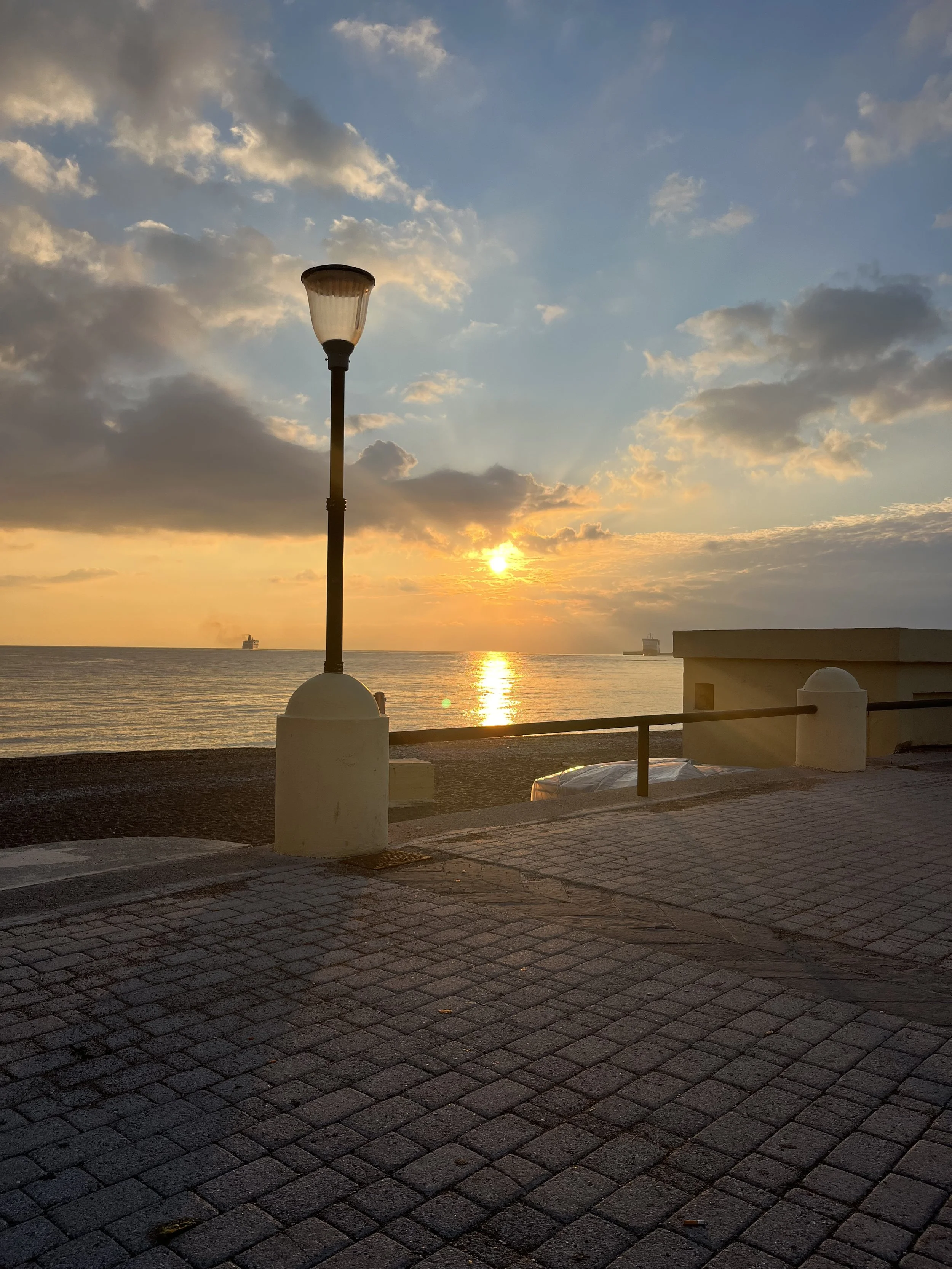
This morning was also my first exposure to the concept of “Greek time.” Both locals and visitors use this term to describe how arriving late or right on time is considered the norm in Greek culture. I believe this is due to the strong emphasis the Greeks have on work-life balance and the value they place on family time.
Throughout my internship, I often saw people arriving late or leaving early to spend time with their families or children. Where we may think of this as inappropriate in the United States, this was encouraged in the aquarium. They were encouraged to bring their children to work on holidays, granted days off at the last minute for childcare issues, and allowed to arrive late if they wanted to have breakfast with their families.
The people who worked at the aquarium were also extremely close. They valued having personal relationships with their coworkers and even calling each other uncle and aunt to their children. I was often sent home early, told to take days off to travel or go out with friends, and invited on outings across Rhodes with the biologists that worked at the aquarium. I was never viewed as just an intern or a worker, but as someone who they wanted to experience the culture of Greece and get to see as much of the island as possible.
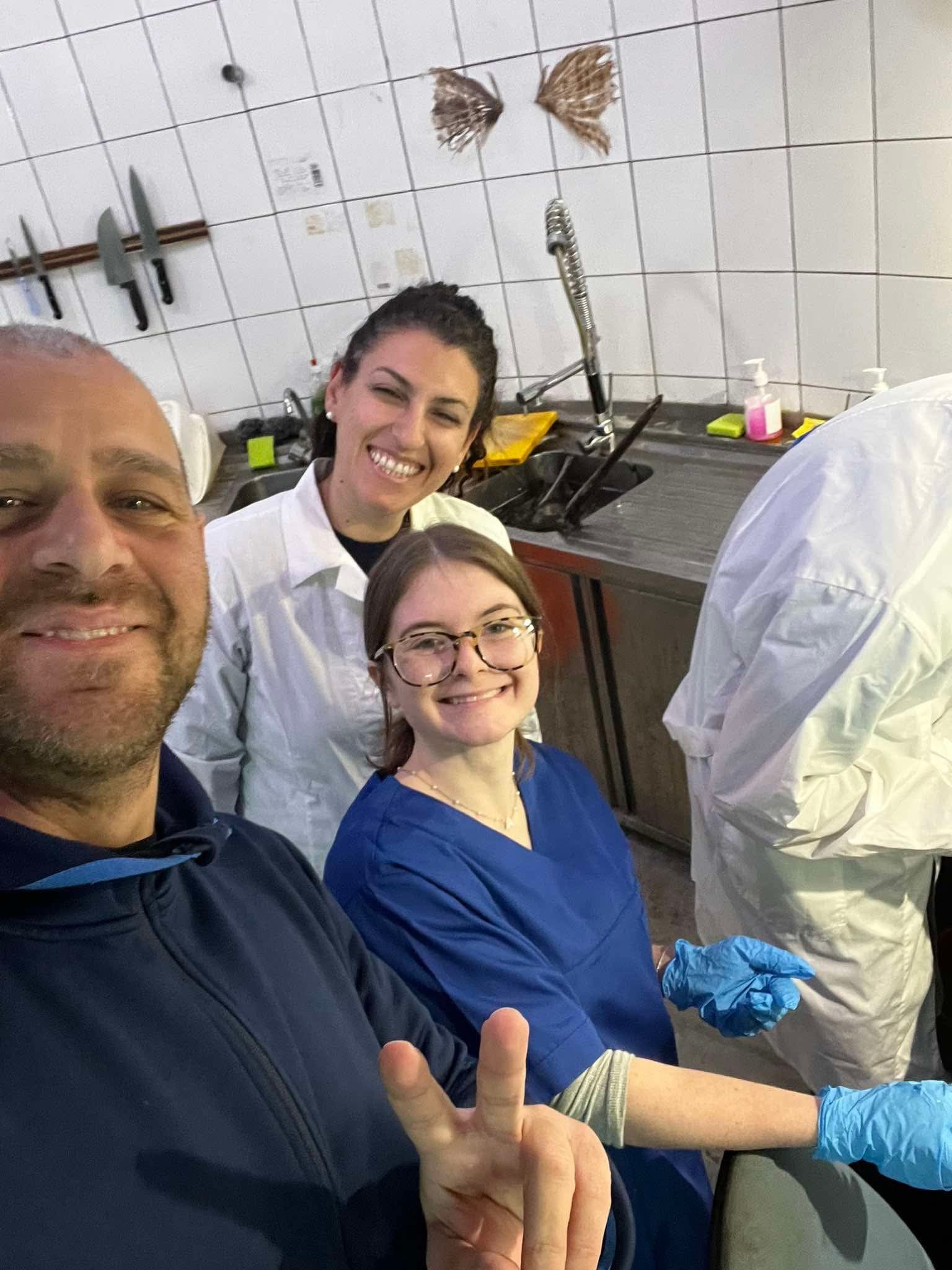
This mindset also bled into our classes and professor’s teaching style. They saw us as more of an equal group rather than just a teacher telling us about the topic. They took us to get coffee, took us to their houses, and gave us tips about what bars were good and what bars were bad. I think this was kind of a shock to me because I usually think of professors as my seniors or superiors when in classes. They would also frequently arrive late or cancel class at the last minute for family things, like their wife performing a show.
From my experience, “Greek time” isn’t just the act of being late. It is the belief that your home and family-life are more important than your work. This idea is extremely valuable and leads to a lot more appreciation and cooperation in work environments.
The people that I experienced were a lot more willing to work with you and help you when they were able to be there for their family. They cared about their coworkers a lot more when they were understanding each other and didn’t see being with them as taking away from the time they could have been spending with their families.
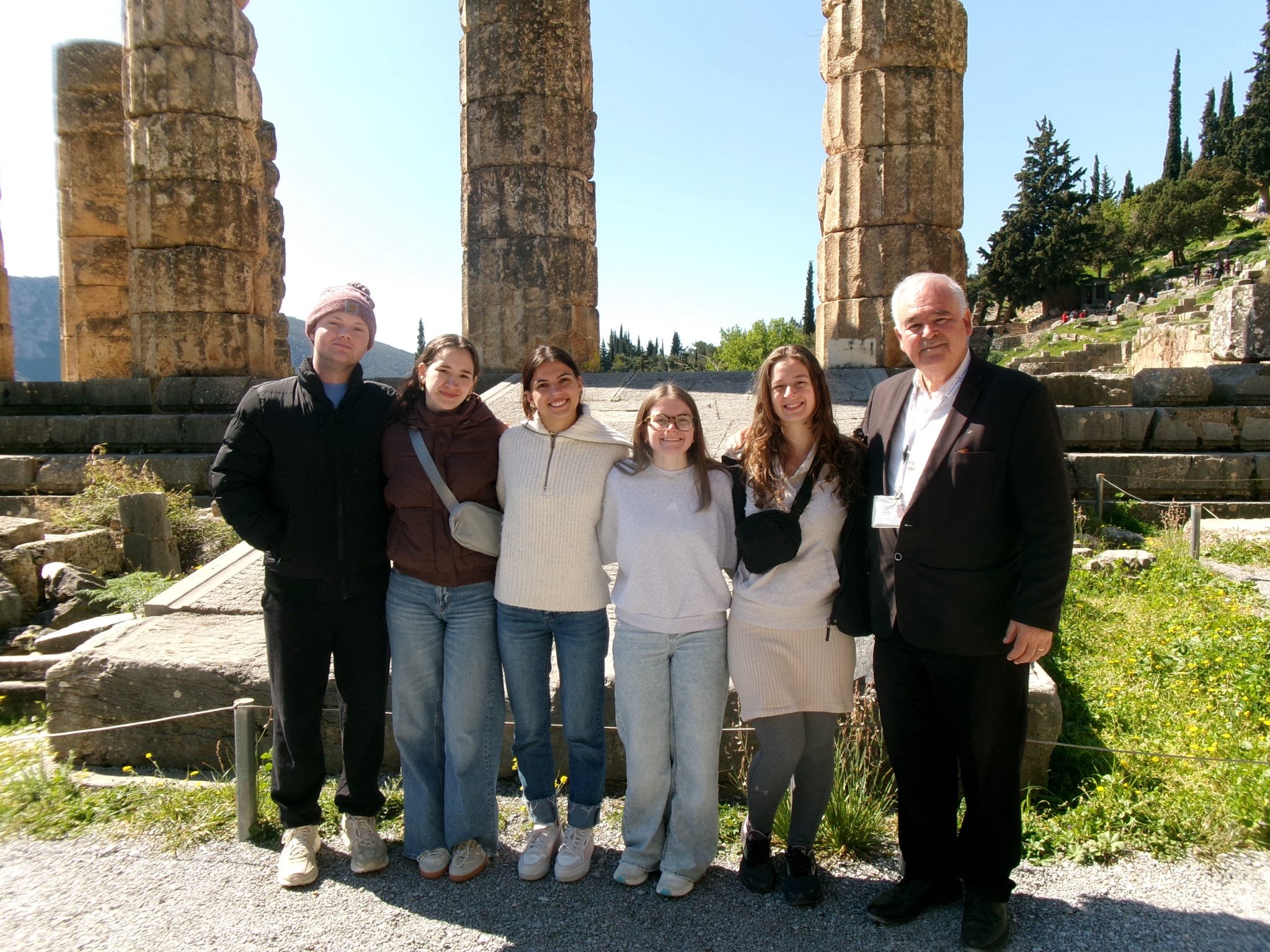
Having learned this lesson during my study abroad, I am much more likely to split up my time between schoolwork and spending time with my friends and family. Prior to this experience, I had always seen school as my main purpose in life and a defining factor in my self-worth. Coming back from my semester in Rhodes, balancing my workload and social life has become a lot easier. I was shown that I am not solely defined by my academic performance, but also by the time that I spend with the people around me. While I still do value my grades and my professional performance, I feel more joy in completing them when they are not as tense or high stakes.
Allison Canupp, a junior biology major, studied in Rhodes, Greece through the Paideia program in Spring 2025. After her graduation from Lander University in May 2027, Allison plans to attend graduate school to further her education.